Pentagon Designates Anthropic as Supply-Chain Risk After Failed Contract Negotiations
The DoD labeled Anthropic a supply-chain risk after disagreements over military control of AI models, ending a $200M contract.
Sources · TechCrunch AI
The news desk
Recent developments in artificial intelligence, with the original sources one click away.
The DoD labeled Anthropic a supply-chain risk after disagreements over military control of AI models, ending a $200M contract.
Sources · TechCrunch AI
Open-source software maintainers face harassment from AI agents after rejecting automated code contributions, marking a new era of AI-enabled abuse.
Sources · MIT Technology Review
Anthropic launches Sonnet 4.6 and maintains stance on Pentagon AI work despite reported pressure, while Google releases Gemini 3.1 Pro.
Sources · Last Week in AI
OpenAI unveils GPT-5.4, featuring state-of-the-art coding capabilities, computer use, tool search, and an expanded 1 million-token context window.
Sources · OpenAI
The Department of Defense officially designated Anthropic as a supply-chain risk, making it the first American AI company to receive this label.
Sources · NYT Technology / TechCrunch AI
Recent preprints tackle personalized value alignment, safety intervention reversals across languages, and knowledge consistency in multilingual LLMs.
Sources · arXiv AI (cs.AI)
Companies are transitioning from experimental AI projects to production systems, redirecting budgets and resources toward implementation.
Sources · MIT Technology Review

OpenAI reports GPT-5.2 Pro helped researchers derive and verify nonzero graviton tree amplitudes in new quantum gravity preprint.
Sources · OpenAI

While tech companies debate AI military restrictions, Smack Technologies is actively training models to plan battlefield operations.
Sources · WIRED AI

Recent arXiv publications introduce methods for training LLMs to use code interpreters, leverage knowledge graphs for reasoning, and automate cloud diagnostics.
Sources · arXiv AI (cs.AI)

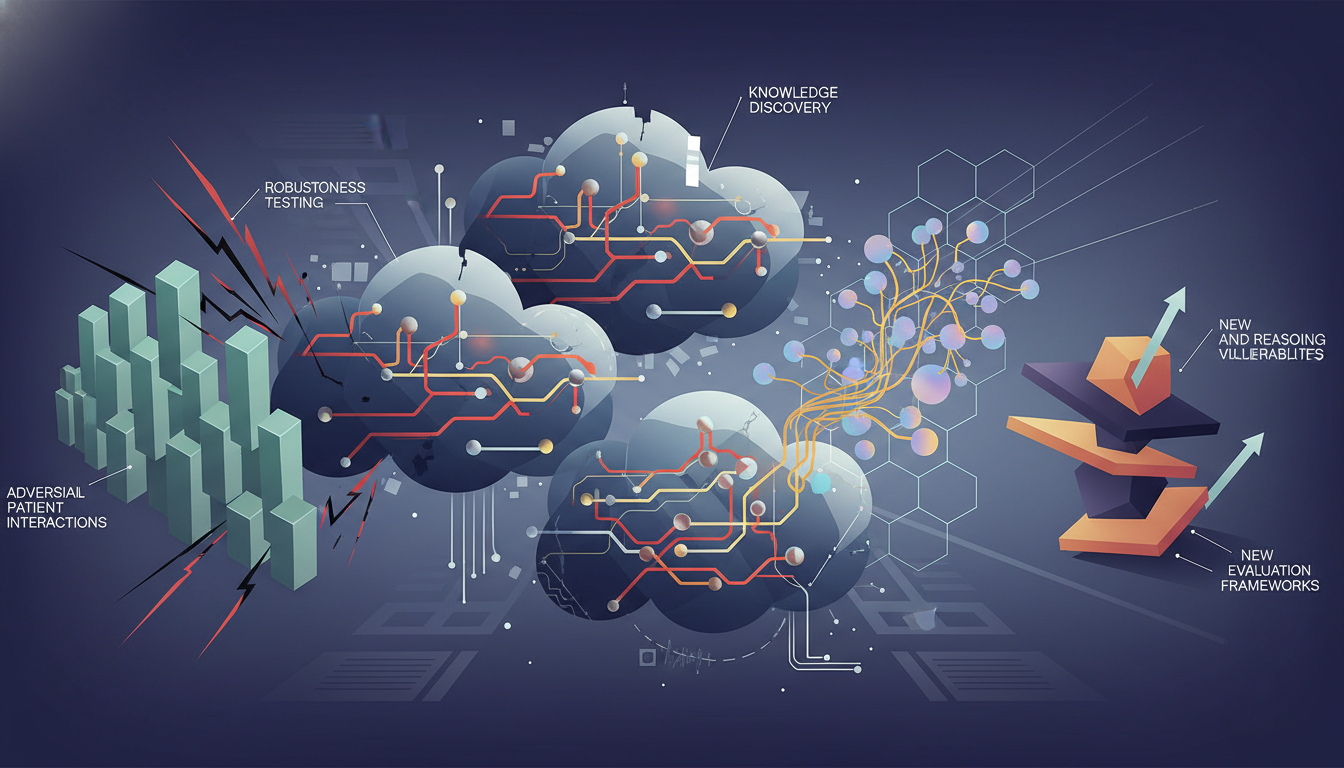
Researchers probe LLM vulnerabilities in clinical settings, knowledge discovery capabilities, and reasoning robustness through new evaluation frameworks.
Sources · arXiv AI (cs.AI)
Google releases Gemini 3.1 Flash-Lite, positioning it as the fastest and most cost-efficient model in the Gemini 3 series.
Sources · Google AI Blog / DeepMind

Research shows large language models can identify pseudonymous users with surprising accuracy, raising new privacy concerns.
Sources · Ars Technica AI

Three recent papers propose novel approaches to reduce computational costs and improve efficiency in LLM fine-tuning processes.
Sources · arXiv AI (cs.AI)
Three arXiv papers address combining expert models, autonomous web navigation challenges, and security vulnerabilities in LLM-based agents.
Sources · arXiv AI (cs.AI)
Researchers publish papers on neurosymbolic reasoning, security vulnerabilities, and efficient fine-tuning approaches for LLMs.
Sources · arXiv AI (cs.AI)

Amazon AWS published a guide on creating conversational AI agents using Amazon Bedrock, LangGraph, and MLflow on SageMaker AI.
Sources · Amazon AWS AI
ChatGPT uninstalls have skyrocketed by 295% following OpenAI's partnership with the US Department of Defense, leading users to rivals like Claude.
Sources · Android Headlines / Vertu +11
Three arXiv papers tackle reward optimization issues in LLM post-training and automated grading accuracy through rubric-based approaches.
Sources · arXiv AI (cs.AI)
OpenAI announced an agreement allowing US military use of its technologies in classified settings, following rushed negotiations.
Sources · MIT Technology Review